Tragelaphus sylvaticus – Le guib du Cap
Cet article n’est pas encore disponible en français : vous lisez la version originale en anglais. Voir la page anglaise
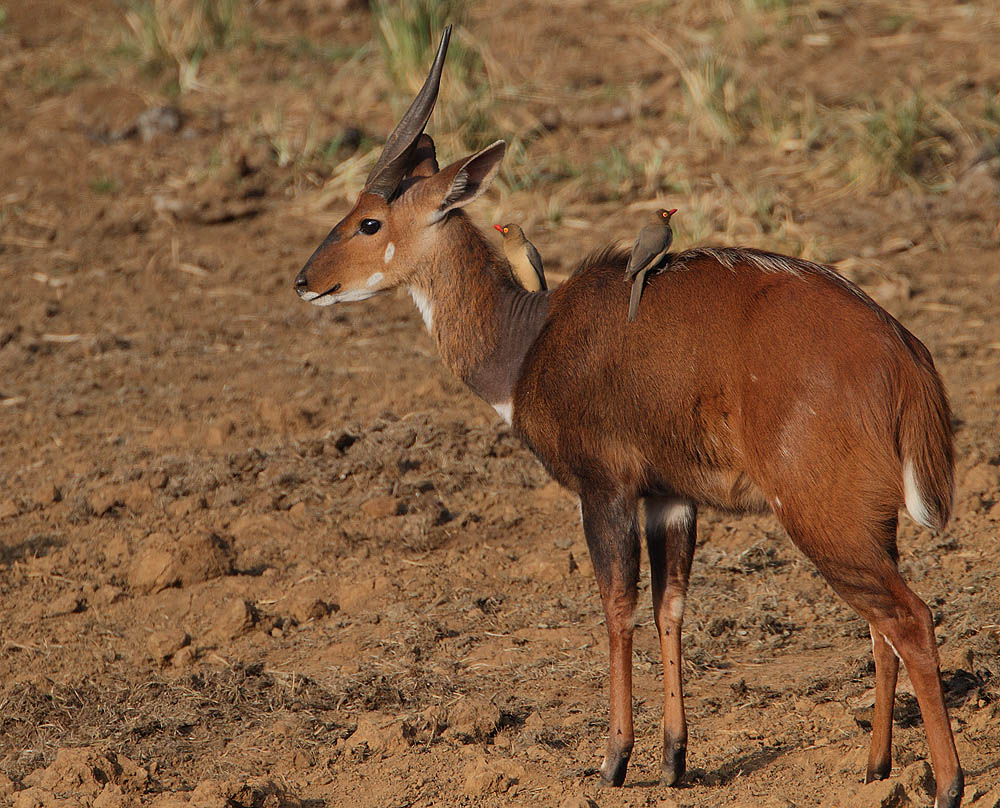
A solitary forest wanderer, moving silently along the green banks of the Tano River
Quick Facts
- Common Name: Cape Bushbuck (or simply Bushbuck)
- Scientific Name: Tragelaphus sylvaticus
- Family: Bovidae
- IUCN Status: Least Concern (but locally threatened)
- Activity: Mostly nocturnal or crepuscular (active at dawn and dusk)
- Habitat: Forest edges, riverine thickets, swamps, and dense savanna
- Size: 60–100 kg; ~80 cm at the shoulder
Distribution and Habitat
The Cape Bushbuck is one of the most widespread antelope species in Africa, with several subspecies adapted to different habitats.
In theTano River basin, the bushbuck:
- Roams in forest margins and riparian forests
- Prefers areas with dense vegetation near water sources
- Is occasionally spotted near farm edges, especially at night
They can live in proximity to humans if sufficient cover is available.
Appearance
- Coat: Dark brown or reddish with white spots and stripes on the flanks and a white underbelly
- Horns: Only males have spiraled horns (up to 50 cm)
- Markings: White patches on the throat and legs
- Tail: Bushy, with a white underside
Their coloration and patterns vary significantly by region, allowing them to blend into their specific environments.
Behavior and Diet
- Solitary or in small family groups
- Extremely shy and elusive, often freezing before fleeing
- Diet:
- Leaves, shoots, fallen fruit, herbs, and occasionally bark
- Known to forage in gardens and cocoa farms at night
They follow well-worn paths through thickets and along riverbanks.
Reproduction
- Breeds year-round, with peaks tied to rainy seasons
- Gestation: ~6–7 months
- Females typically give birth to one fawn, hidden in dense undergrowth for several weeks
- Fawns are scentless and immobile, relying on camouflage
Cultural and Ecological Importance
In many West African traditions:
- The bushbuck is seen as a spirit animal of discretion and survival
- Associated with forest guardianship and the balance of nature
- May be a clan symbol or feature in traditional stories involving ancestral hunters
Ecologically, the bushbuck helps:
- Disperse seeds through its feeding
- Support predators like leopards, pythons, and humans (bushmeat)
- Maintain vegetation balance in forest edges
Conservation Concerns
Although considered Least Concern, local populations are threatened in places like the Tano River Basin due to:
- 🏞 Habitat destruction from agriculture and gold mining
- 🔫 Poaching for bushmeat, especially near protected areas
- 🪵 Logging, which reduces cover and breeding habitat
- ⚠️ Human-wildlife conflict when animals feed on crops
Despite its adaptability, the bushbuck still needs dense cover and minimal disturbance to thrive.
Why It Matters for the Tano River
The Cape Bushbuck is:
- A sign of healthy forest edges and water corridors
- A link between sacred lands and ecological integrity
- A silent companion in the twilight of the forest, reminding us to tread lightly
Its graceful steps along the river’s edge are as important as the roar of a larger beast.
🔗 Have you seen bushbuck tracks or heard rustling in the forest at night? Do elders speak of them visiting farms or crossing paths near the Tano? Share your knowledge at [TanoRiver.com/submit]