Syncerus caffer – Le buffle d’Afrique
Cet article n’est pas encore disponible en français : vous lisez la version originale en anglais. Voir la page anglaise
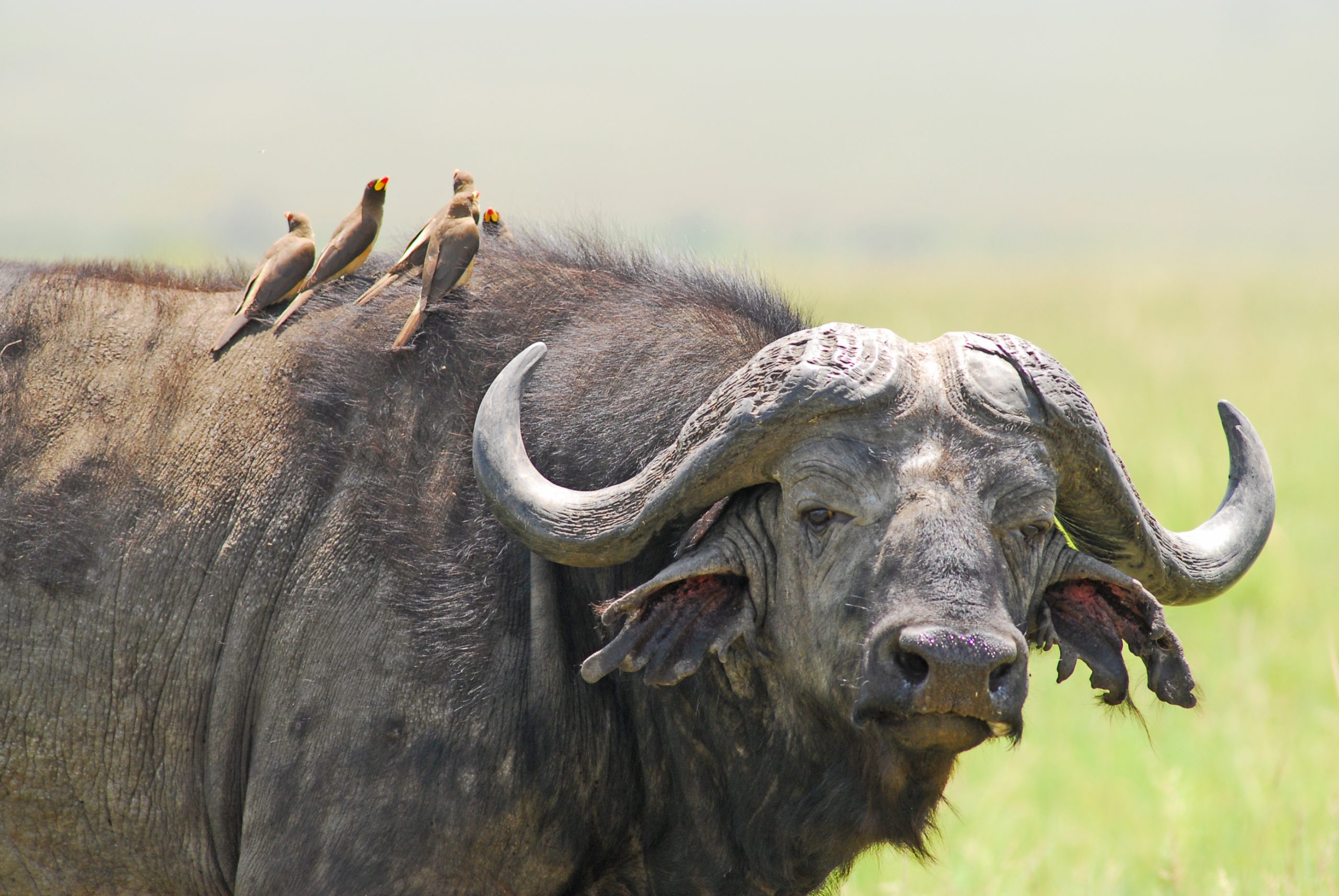
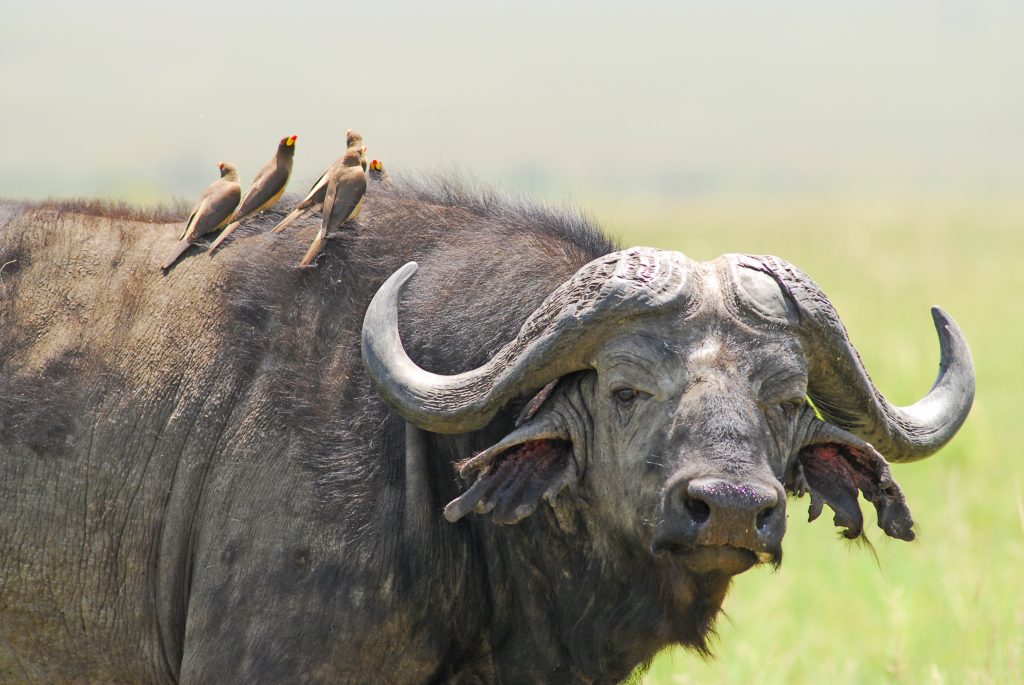
A symbol of strength, survival, and silent migration through the Tano's wild corridors
Quick Facts
- Common Name: African Buffalo
- Scientific Name: Syncerus caffer
- Family: Bovidae
- IUCN Status: Near Threatened
- Size: 1.0–1.7 meters at the shoulder; 300–800 kg
- Activity: Diurnal and crepuscular (daytime and twilight)
- Habitat: Savanna, forest edge, swampy forests, and river valleys
Distribution and Habitat
The African Buffalo is found across sub-Saharan Africa, including forest and savanna subspecies.
In theTano River region, it may occur:
- In swamp forests and riparian grasslands near the Tanoé-Ehy Forest Reserve
- In transitional zones between dense forest and open terrain
- Within protected corridors that connect Ivory Coast and Ghana
The subspecies most likely present is the Forest Buffalo (Syncerus caffer nanus), smaller and redder than its savanna relatives.
Appearance
- Color: Reddish-brown (forest buffalo) to dark black (savanna buffalo)
- Horns: Wide, curved horns forming a boss in mature males
- Build: Stocky, muscular, with powerful neck and shoulders
- Tail: Tipped with a tuft of coarse hair
The forest buffalo has a smaller frame and shorter legs, adapted to life in dense vegetation.
Behavior and Ecology
- Highly social, living in herds of up to 20–40 individuals in forest zones
- Grazes and browses, eating:
- Grasses, shrubs, aquatic plants, and leaves
- Moves between grazing sites and watering holes, often along forest paths and riverbanks
- Wary and highly alert to predators
In areas with low disturbance, they maintain seasonal movement patterns, tied to rainfall and vegetation growth.
Reproduction
- Breeds year-round, peaking in wet seasons
- Females give birth to a single calf after an 11-month gestation
- Calves are kept within the group and protected by adults
Calves are highly vulnerable to predators in their first months.
Ecological and Cultural Role
The African Buffalo is:
- A keystone grazer, helping maintain grassy clearings and control forest encroachment
- A prey species for lions, leopards, and large crocodiles (though few remain in the Tano Basin)
- A symbol of strength, endurance, and communal defense in many African cultures
Among Akan and neighboring peoples, buffaloes may feature in proverbs, clan totems, and traditional hunting stories.
Conservation Concerns
Although not yet endangered, buffalo populations are declining in many regions due to:
- 🏞 Habitat loss from agriculture and logging
- 🧱 Fragmentation preventing natural herd movement
- 🦠 Disease transmission from domestic livestock
- 🔫 Poaching, both for meat and conflict with farmers
The forest buffalo is especially vulnerable due to its limited range and dependence on intact rainforest corridors.
Why It Matters for the Tano River
The African Buffalo is:
- A reminder that large mammals still roam the green heart of the Tano
- A vital part of ecological balance, clearing paths and fertilizing soil
- A symbol of what still survives when forests are allowed to breathe
Though rarely seen, their footprints and dung signal a living ecosystem beneath the canopy.
🔗 Have you or elders in your village heard buffalo calls, seen signs like trampled paths, or come across old herding grounds near the Tano? Share your story at [TanoRiver.com/submit]