Scotonycteris zenkeri – La roussette de Zenker
Cet article n’est pas encore disponible en français : vous lisez la version originale en anglais. Voir la page anglaise
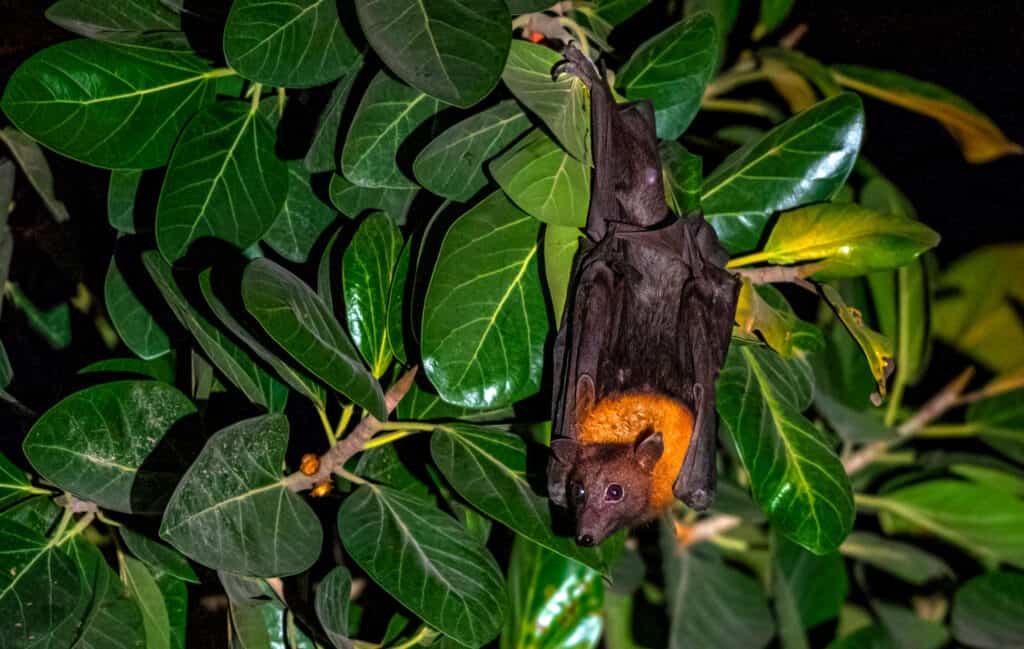
A rare forest pollinator fluttering through the shadows of the Tano canopy
Quick Facts
- Common Name: Zenker’s Fruit Bat
- Scientific Name: Scotonycteris zenkeri
- Family: Pteropodidae (Old World Fruit Bats)
- IUCN Status: Near Threatened
- Activity: Nocturnal
- Habitat: Tropical lowland forests and swampy undergrowth
- Weight: ~30–60 grams
Distribution and Habitat
Zenker’s Fruit Bat is found in the Upper Guinean rainforest belt of West Africa, including:
- Côte d’Ivoire, Ghana, Liberia, Nigeria, and Sierra Leone
In theTano River region, it may occur:
- In the Tanoé-Ehy Forest Reserve, a biodiversity hotspot
- Within swamp forests, canopy gaps, and fruiting tree zones
- Roosting in dense foliage, palms, or under broad leaves
It is rarely seen and was once considered one of Africa’s most elusive fruit bats.
Appearance
- Size: Small for a fruit bat
- Fur: Soft, greyish-brown to reddish-brown, often with white markings
- Wings: Narrow and rounded for maneuvering through forest clutter
- Face: Short muzzle, large eyes, and small rounded ears
It resembles a cross between a mini flying fox and a forest shrew, with a gentle expression and delicate body.
Behavior and Ecology
- Nocturnal and frugivorous (fruit-eating)
- Feeds on:
- Figs, guavas, breadfruit, and wild berries
- Occasionally visits flowering trees for nectar
- Plays a vital role in pollination and seed dispersal, especially in dense forest interiors
Often flies low under the canopy, zigzagging through vines and branches.
Roosting and Reproduction
- Roosts solitarily or in small groups
- Hides in leafy tangles, tree cavities, or beneath large leaves
- Breeding season poorly understood, but likely tied to fruiting peaks
Due to its rarity, very little is known about its reproductive biology in the wild.
Ecological Importance
Zenker’s Fruit Bat is a key forest pollinator and seed disperser:
- Helps regenerate forests by spreading seeds over wide areas
- Pollinates night-blooming trees that depend on bats
- Supports biodiversity from canopy to understory
Its feeding helps maintain the health and connectivity of tropical ecosystems like those in the Tano basin.
Conservation Concerns
Listed as Near Threatened, the Zenker’s Fruit Bat is vulnerable to:
- 🌳 Deforestation, especially of old-growth fruiting trees
- 🛢️ Habitat degradation from mining and agriculture
- 🔥 Forest fragmentation, reducing feeding and roosting range
- ❌ Lack of data, making protection efforts difficult
Its disappearance would signal a deeper breakdown in the forest’s pollination network.
Why It Matters for the Tano River
Zenker’s Fruit Bat is:
- A quiet architect of the forest, spreading life with every flight
- An indicator of undisturbed tropical habitats
- A symbol of the hidden biodiversity still thriving in the Tano region
Though rarely seen, it is everywhere the forest bears fruit.
🔗 Have you noticed unusual bats in fruit trees near your village or farm? Share your stories, photos, or audio recordings at [TanoRiver.com/submit]