Phrynobatrachus calcaratus – La grenouille de rivière à éperon
Cet article n’est pas encore disponible en français : vous lisez la version originale en anglais. Voir la page anglaise
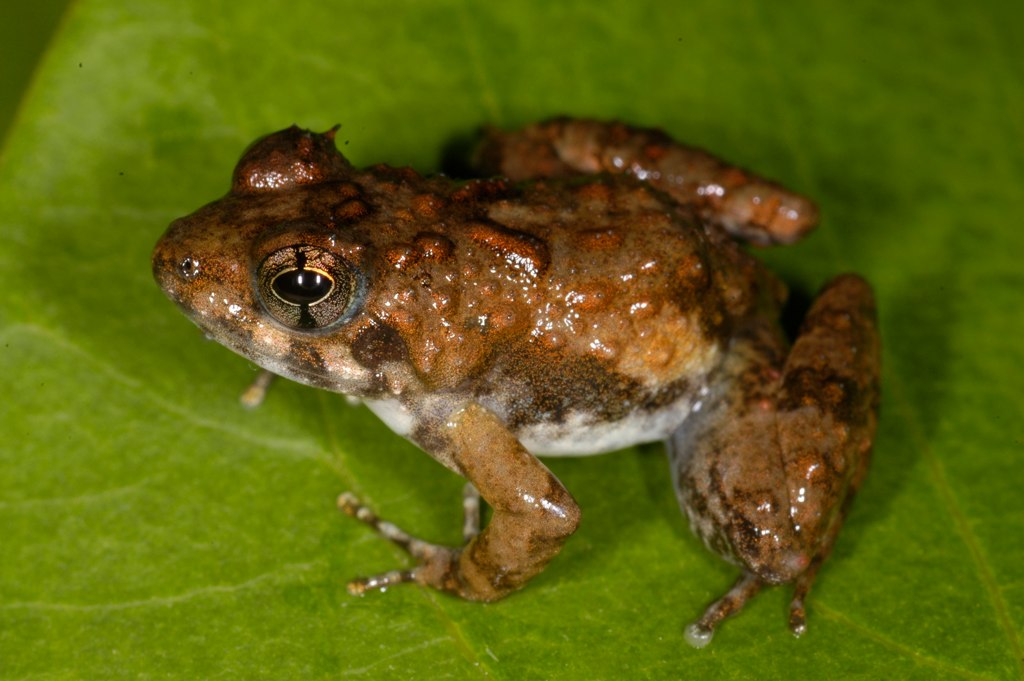
A resilient little jumper thriving along puddles and pools in the forests of the Tano
Quick Facts
- Common Name: Calcarine River Frog
- Scientific Name: Phrynobatrachus calcaratus
- Family: Phrynobatrachidae (African puddle frogs)
- IUCN Status: Least Concern, highly adaptable
- Size: 15–25 mm (very small)
- Activity: Diurnal and nocturnal
- Habitat: Forest floor, swamps, rice fields, puddles, and roadside ditches
Distribution and Habitat
This species is one of the most widespread puddle frogs in West Africa, found in:
- Côte d’Ivoire, Ghana, Nigeria, Cameroon, and neighboring countries
In theTano River Basin, it thrives in:
- Wet leaf litter in forested areas
- Temporary puddles formed during rainy seasons
- Disturbed lands near agriculture or settlements
- Shallow water bodies and river edges
It is highly tolerant of human-modified environments, including banana farms and cocoa fields.
Appearance
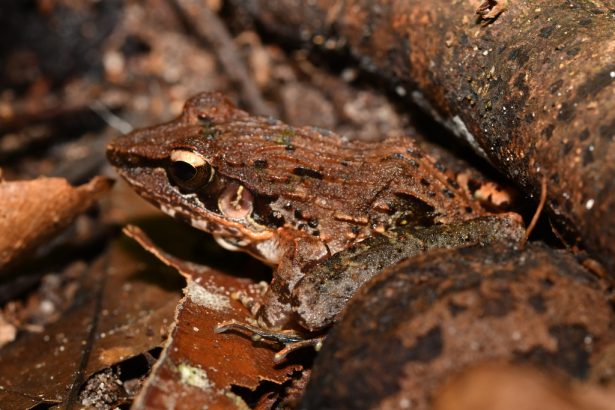
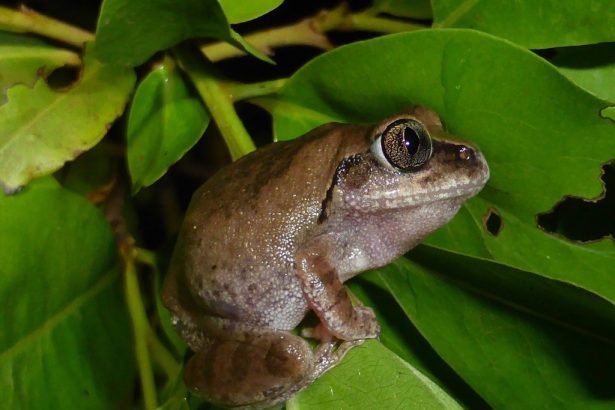
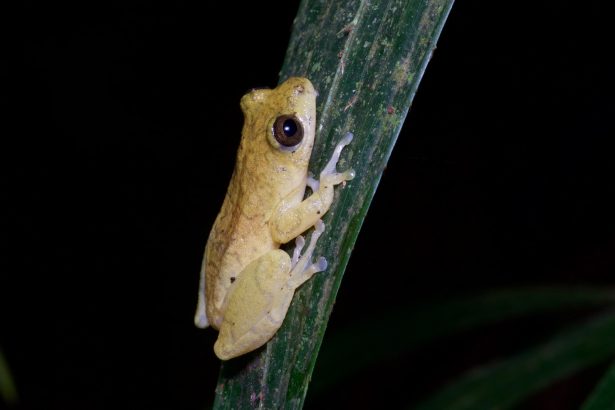
- Color: Brown or grayish, often with dark spots or blotches
- Body: Small and flattened with short limbs
- Skin: Smooth to slightly rough
- Distinctive Trait: A small heel spur ("calcar") on each hind foot — a feature that gives it its name
Its subtle appearance helps it blend with muddy or leaf-covered ground.
Behavior and Ecology
- Found active during rain, hopping between puddles and leaf litter
- Moves with short, quick hops
- Diet: Ants, termites, mites, and other tiny invertebrates
- Often seen in high densities in breeding pools
Their call is a faint clicking or chirping, heard mostly at night after rainfall.
Breeding
- Breeds opportunistically after rainfall, often in temporary water bodies
- Eggs are laid in water and hatch rapidly
- Tadpoles develop quickly to exploit short-lived pools
- May reproduce multiple times during the rainy season
Its fast reproductive cycle helps it survive in variable environments.
Ecological Importance
The Calcarine River Frog:
- Controls insect populations, including pests
- Supports wetland food chains, serving as prey for birds, snakes, and larger frogs
- Tolerates degraded habitats, making it a resilient component of disturbed ecosystems
Though small, its abundance makes it a keystone microfaunal species.
Threats
While globally secure, Phrynobatrachus calcaratus may still face local pressures:
- 🛢 Water pollution from illegal mining and agriculture
- 🧱 Habitat compaction from trampling and development
- 🚫 Loss of breeding sites due to drainage and infrastructure
Its presence (or absence) can be a signal of wetland health.
Why It Matters for the Tano River
The Calcarine River Frog is:
- A true survivor, thriving in both forest shadows and roadside ditches
- A biological barometer for changing water quality and land use
- A messenger of the hidden richness in every puddle, marsh, and pond
It tells us that the health of the Tano depends not only on trees and rivers — but also on the smallest voices in the mud.
🔗 Have you seen small frogs hopping after rainfall or clinging to wet plants? Share your encounters with this adaptable species at [TanoRiver.com/submit]