Hyperolius viridigulosus – La rainette des roseaux à gorge verte
Cet article n’est pas encore disponible en français : vous lisez la version originale en anglais. Voir la page anglaise
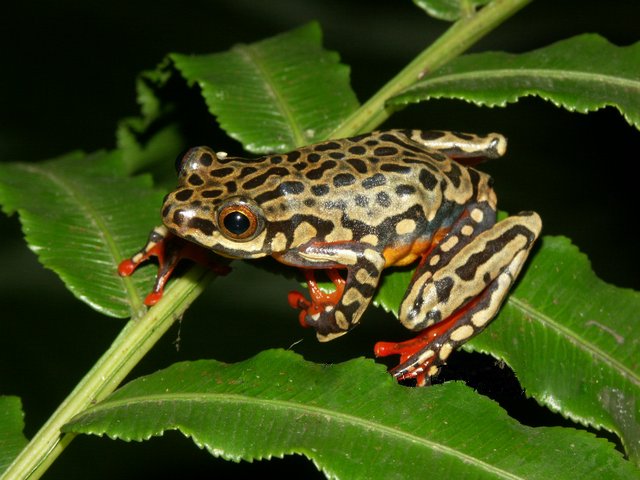
A vibrant, forest-dwelling amphibian whose emerald throat echoes through the twilight wetlands of West Africa
Quick Facts
- Common Name: Green-Throated Reed Frog
- Scientific Name: Hyperolius viridigulosus
- Family: Hyperoliidae (Reed Frogs)
- IUCN Status: Endangered
- Size: ~2.5–3.5 cm
- Activity: Nocturnal
- Habitat: Moist lowland tropical forests and swamps
Distribution and Habitat
Hyperolius viridigulosus is endemic to West Africa, with known populations in:
- Côte d’Ivoire and Ghana
In theTano River Basin, it may occur:
- In swampy patches of the Tanoé-Ehy Forest
- Around temporary forest pools, marshes, and slow-moving streams
- In dense understory vegetation, especially during and after rainfall
Its presence is tightly linked to pristine humid forests and wetland microhabitats.
Appearance
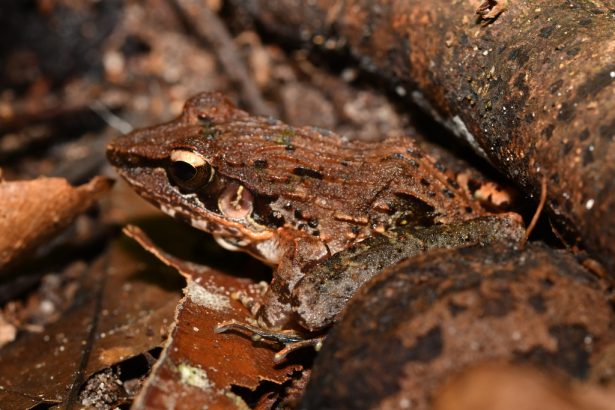
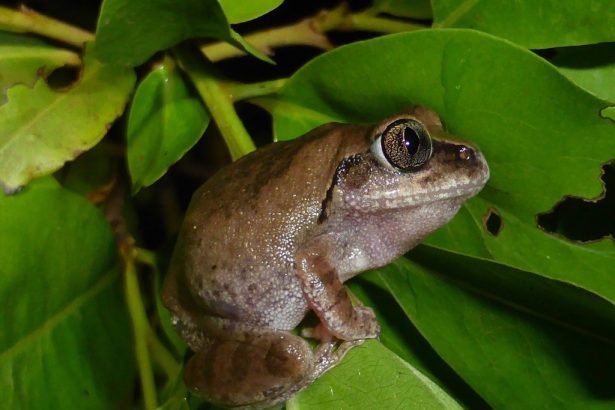
- Color: Generally greenish to brown, with males often showing a bright green throat during calling
- Throat sac: Inflates vividly during vocalization
- Skin: Smooth and semi-translucent
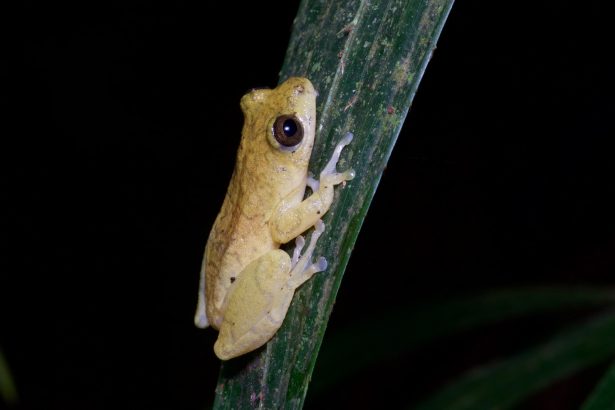
- Body: Slender, with long limbs and toe discs adapted for climbing
Its delicate form and color make it a master of camouflage among leaves and reeds.
Behavior and Diet
- Nocturnal: Emerges at dusk, often perched on low vegetation near water
- Diet:
- Small insects like mosquitoes, midges, and gnats
- Males produce soft, repeated clicks or whistles to attract mates
- Tends to cling to stems and broad leaves, silently waiting for prey
Highly sensitive to changes in humidity and water availability.
Reproduction
- Breeds in temporary rain-fed pools
- Males call from low vegetation above water
- Females lay eggs on leaves just above the surface, allowing tadpoles to drop into the water upon hatching
- Tadpoles develop in small pools, which must remain moist for weeks
This specialized breeding strategy makes them vulnerable to pool drying and pollution.
Conservation Concerns
Hyperolius viridigulosus is classified as Endangered due to:
- 🌳 Deforestation, particularly of coastal and swamp forests
- 🛤 Habitat fragmentation, isolating breeding populations
- 🧪 Pollution of forest pools from agriculture and mining runoff
- 🌾 Loss of temporary wetlands, essential for reproduction
It survives only in remnant pockets of intact forest with minimal disturbance.
Why It Matters for the Tano River
The Green-Throated Reed Frog is:
- A symbol of amphibian fragility and beauty
- A critical indicator of the health of forest-edge wetlands
- A contributor to insect control and a key part of the food web
Protecting this frog helps preserve the micro-wetlands that sustain biodiversity in the Tano basin.
🔗 Have you seen or heard tree frogs calling at night near forest pools? Help us track populations at [TanoRiver.com/submit]