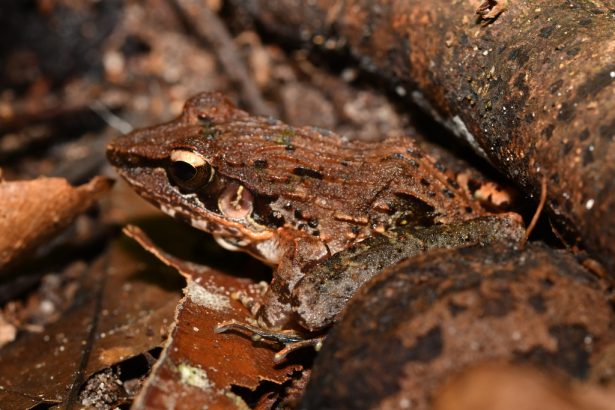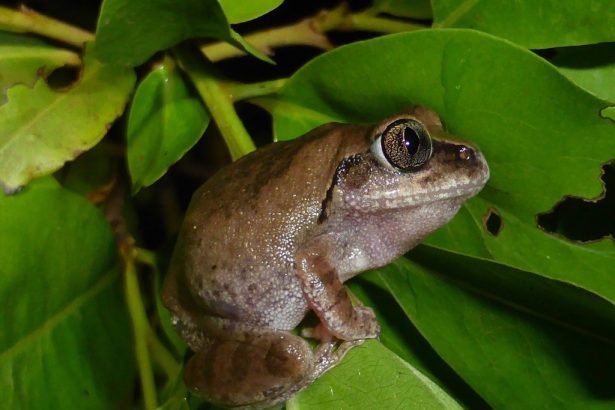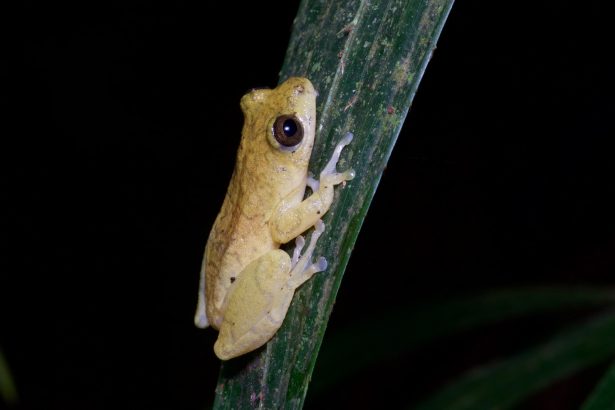
Hyperolius guttulatus – La rainette des roseaux gutturale
Cet article n’est pas encore disponible en français : vous lisez la version originale en anglais. Voir la page anglaise

A delicate amphibian singing from the swamps of the Tano
Scientific Name:Hyperolius guttulatus
Common names: Guttural Reed Frog, Spotted Reed Frog
Family: Hyperoliidae
IUCN Status: Least Concern (but declining in some areas due to habitat loss)
Habitat and Distribution
The Guttural Reed Frog is native to West and Central Africa, occurring in:
- Côte d’Ivoire, Ghana, Nigeria, Cameroon, and surrounding regions
In theTano River basin, it is found:
- In and around swamp forests, seasonal floodplains, and marshy vegetation
- Often near slow-moving tributaries, ponds, rice paddies, and forest pools
It thrives in humid lowland areas with dense aquatic vegetation.
Physical Description
- Size: Small — 2 to 3.5 cm in length
- Coloration:
- Typically light green or yellowish, often with small red or brown spots (guttulate pattern)
- Some individuals show translucent skin with visible organs
- Large eyes, and toes with sticky pads for climbing
It blends easily into the reeds and grasses along wetlands and streams.
Behavior and Ecology
- Nocturnal and arboreal, but active near water at night
- Diet: Feeds on small insects, mosquitoes, and tiny invertebrates
- Uses its large eyes and sensitive hearing to detect prey and avoid predators
Breeding:
- Males call with a short, guttural “crick-crick-crick” sound at dusk
- Females lay eggs on vegetation just above the waterline
- Tadpoles drop into the water after hatching and complete metamorphosis in a few weeks
This breeding behavior ensures higher survival rates in ephemeral pools.
Ecological Role
- Helps control insect populations, especially mosquitoes
- Tadpoles filter nutrients in shallow pools, supporting aquatic plant growth
- Prey for birds, fish, snakes, and larger frogs
- Indicator species for wetland health and water quality
Its abundance signals that the ecosystem is functioning properly.
Threats
Although widespread, Hyperolius guttulatus faces growing risks:
- ❌ Habitat destruction, especially:
- Conversion of wetlands to farmland
- Pollution from pesticides and mining waste
- ❌ Loss of breeding sites due to drainage and erosion
- ❌ Vulnerable to climate variability, which can alter breeding seasons
As amphibians breathe through their skin, they are highly sensitive to toxins and environmental change.
Why It Matters for the Tano River
The Guttural Reed Frog is:
- A tiny voice in the nighttime wetlands, signaling life and renewal
- A species that depends on clean water, quiet forests, and balanced ecosystems
- A reminder that conservation begins with the smallest lives, not just the most visible ones
Their evening calls are part of the Tano’s natural music — soft, fleeting, and vital.
🔗 Have you heard reed frogs calling near your village or rice field at night? Share your recording or story at [TanoRiver.com/submit]