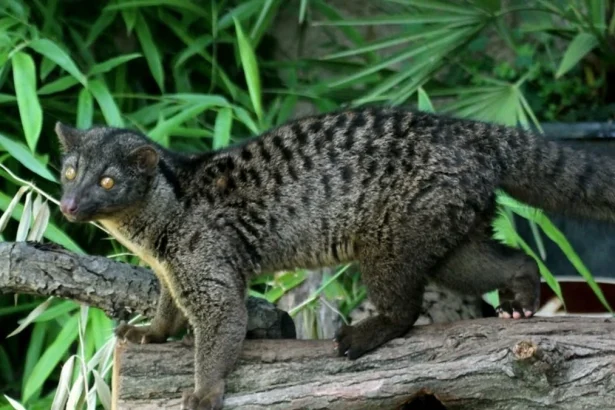
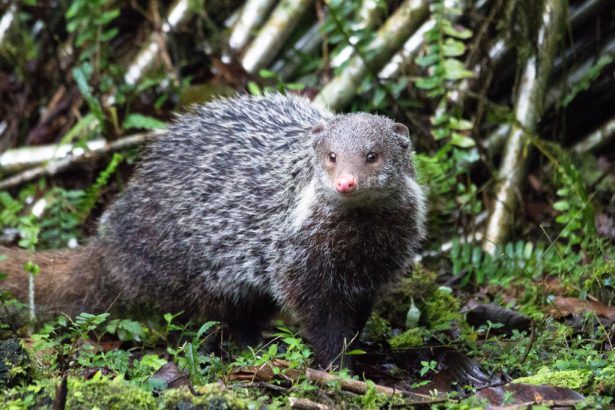
Genetta poensis – La genette royale
Cet article n’est pas encore disponible en français : vous lisez la version originale en anglais. Voir la page anglaise
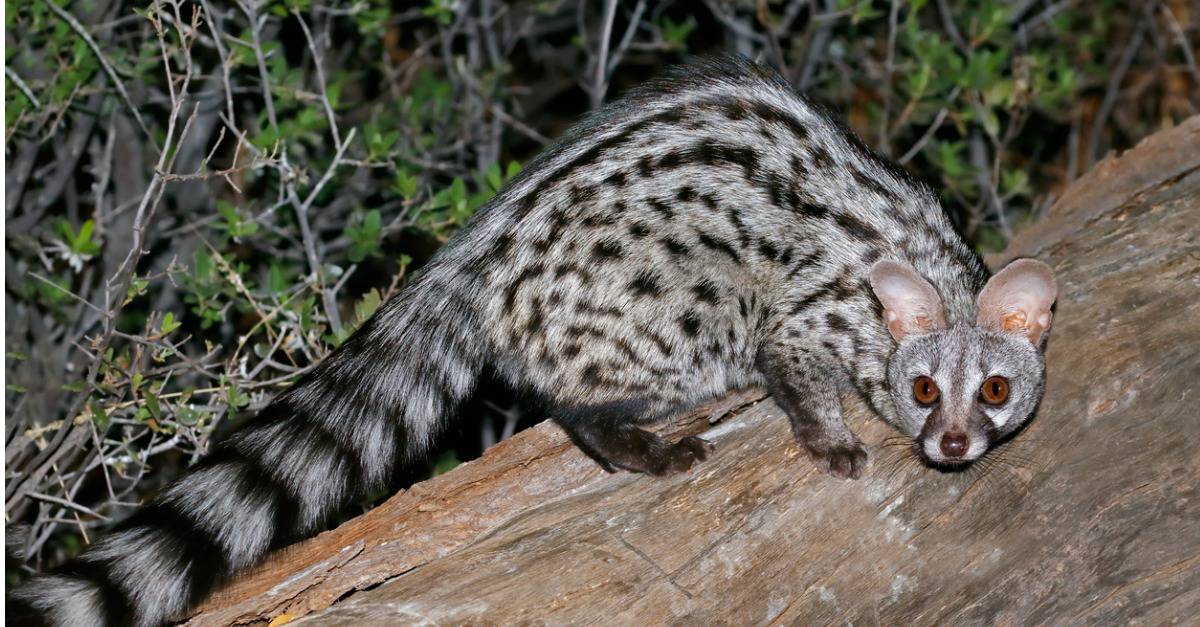
A secretive shadow of the night, silently weaving through the forests of the Tano
Quick Facts
- Common Name: King Genet
- Scientific Name: Genetta poensis
- Family: Viverridae (civets and genets)
- IUCN Status: Data Deficient (due to limited field observations)
- Activity: Nocturnal
- Habitat: Tropical forests, riverine woodlands, swampy undergrowth
Distribution and Habitat
The King Genet is a rare and little-known species native to West and Central Africa, including:
- Ghana, Côte d’Ivoire, Nigeria, and Cameroon
In theTano River ecosystem, it likely inhabits:
- Dense forests near the Tanoé-Ehy Swamp Forest
- Riparian zones, forest clearings, and possibly cocoa agroforests
- Nesting in tree hollows, dense brush, or fallen logs
Its elusive nature and nocturnal habits make sightings extremely rare.
Description
- Size: Medium-sized carnivore (~40–55 cm body + long tail)
- Tail: Long and banded, often equal to body length
- Fur: Grayish or brown with faint spots or stripes, depending on individual
- Face: Pointed snout, large eyes, and prominent whiskers
Unlike more boldly marked genets, the King Genet is subtly colored, aiding camouflage.
Behavior and Ecology
- Nocturnal and solitary
- Moves gracefully on the ground and can climb trees easily
- Diet:
- Opportunistic carnivore: eats rodents, birds, insects, frogs, and fruit
- May forage near rivers for amphibians or fish remains
They are territorial, marking ranges with scent glands.
Reproduction
- Very little is known
- Like other genets, they likely give birth to 1–3 young in tree hollows or hidden dens
- Cubs are born blind and remain in nests for several weeks
Ecological Role
The King Genet is:
- A mesopredator, helping to regulate populations of small animals
- A scavenger that cleans up carrion and waste
- Part of the nocturnal predator guild that supports biodiversity balance in forest ecosystems
Its hunting helps maintain a check on rodents and insects, especially near farmlands.
Threats
Though data is limited, likely threats include:
- ❌ Deforestation and habitat loss, especially from logging and mining
- 🪤 Accidental trapping in snares set for other animals
- 🔥 Forest fragmentation, which restricts movement and access to prey
Its rarity and secretive behavior mean conservation needs may be overlooked.
Why It Matters for the Tano River
The King Genet is:
- A symbol of the unseen richness of the Tano forest floor
- A night-time sentinel, quietly preserving ecological balance
- An indicator of healthy mid-sized predator populations
Its presence is a sign that the web of life in the Tano Basin still holds — quietly, and at night.
🔗 Do elders or hunters near your community speak of a mysterious striped cat or spotted night hunter? Share your stories at [TanoRiver.com/submit]