Galagoides demidovii – Le galago de Demidoff
Cet article n’est pas encore disponible en français : vous lisez la version originale en anglais. Voir la page anglaise
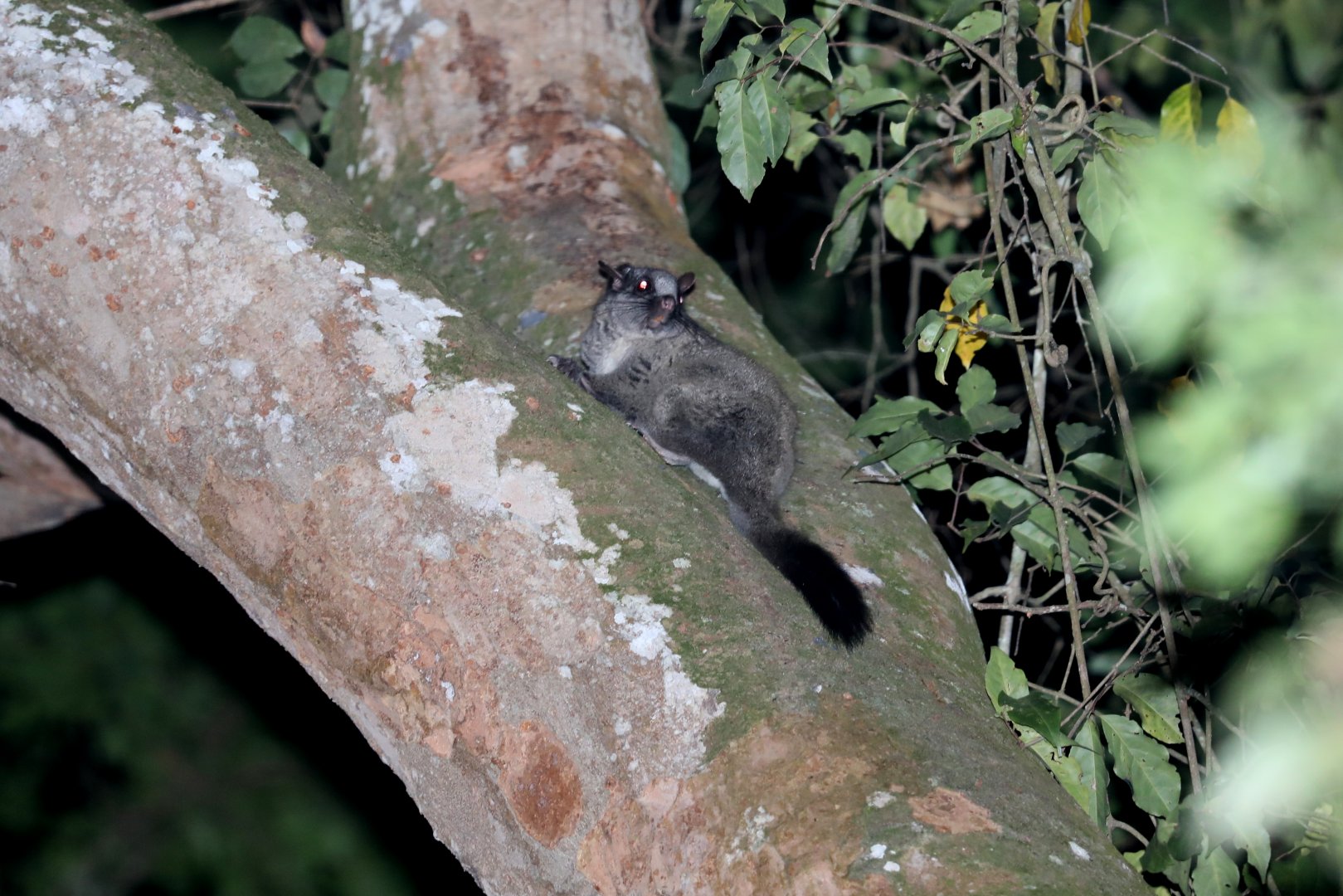
A tiny, big-eyed jumper in the treetops of the Tano night
Quick Facts
- Common Name: Prince Demidoff’s Bushbaby
- Scientific Name: Galagoides demidovii
- Family: Galagidae (bushbabies or galagos)
- IUCN Status: Least Concern
- Activity: Nocturnal
- Habitat: Lowland and swamp forests, forest edges
- Size: ~12–15 cm body, ~18 cm tail
- Weight: 50–85 grams
Distribution and Habitat
This species is widespread in West and Central Africa, including:
- Ghana, Côte d’Ivoire, Liberia, Nigeria, and Cameroon
In theTano River region, it may inhabit:
- The Tanoé-Ehy Forest Reserve
- Riparian woodlands, secondary forest patches, and farm–forest edges
- Tree canopies along quiet, undisturbed river zones
It is one of the smallest primates in Africa, and among the most difficult to observe.
Appearance and Adaptations
- Fur: Reddish-brown to grey-brown, soft and dense
- Eyes: Very large and reflective, adapted for night vision
- Tail: Long, bushy, and used for balance
- Ears: Thin and mobile — foldable when sleeping
Its lightweight body and strong hind limbs allow it to leap many times its length.
Behavior and Ecology
- Strictly nocturnal: Active at dusk and dawn
- Moves in quick, silent bounds through shrubs and lower branches
- Diet: Insects (especially moths and beetles), tree gums, and fruits
- Emits high-pitched calls, often described as whistles or clicks
Spends the day sleeping in leaf nests, vine tangles, or natural hollows.
Reproduction
- Breeds seasonally
- Females typically give birth to 1–2 young
- Newborns are left in nests while the mother forages, returning frequently to nurse
Young bushbabies cling to the mother’s belly when traveling at night.
Ecological Role
Prince Demidoff’s Bushbaby contributes to:
- Pest control by eating insects
- Seed dispersal from fruits
- Tree health by feeding on gums and pruning branches
It is an indicator of healthy understory and mid-canopy structure.
Conservation Concerns
While listed as Least Concern, it faces growing threats in places like the Tano Basin:
- 🌳 Deforestation for farming, logging, and mining
- 🔥 Habitat fragmentation, isolating populations
- 🪤 Vulnerability to snaring or bushmeat hunting, though rarely targeted
Its secretive nature means declines may go unnoticed without focused surveys.
Why It Matters for the Tano River
This bushbaby is:
- A tiny ambassador of forest nocturnal life
- Proof that primates do not only live in daylight
- A symbol of hidden biodiversity, thriving quietly under the canopy
To protect the Prince Demidoff’s Bushbaby is to preserve the nightlife of the forest — and all its delicate rhythms.
🔗 Have you heard high-pitched chirps in the forest after dark? Seen tiny glowing eyes in your flashlight beam? Share your sightings at [TanoRiver.com/submit]