Crocidura goliath – La musaraigne géante à longue queue d’Afrique de l’Ouest
Cet article n’est pas encore disponible en français : vous lisez la version originale en anglais. Voir la page anglaise
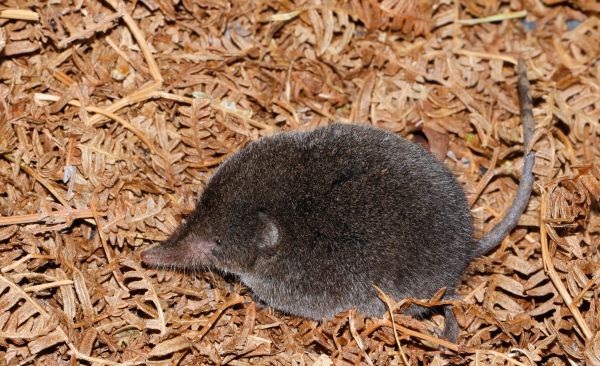
A fast-moving insectivore with a whip-like tail, patrolling the leaf litter of the Tano’s deep forests
Quick Facts
- Common Name: West African Long-tailed Shrew
- Scientific Name: Crocidura goliath
- Family: Soricidae (Shrews)
- IUCN Status: Least Concern, but dependent on intact forest
- Size: Body ~9–12 cm; tail ~8–11 cm
- Weight: ~10–20 grams
- Activity: Nocturnal and crepuscular
- Habitat: Moist tropical forests, particularly deep leaf litter zones
Distribution and Habitat
Native to the Upper Guinean forests of West Africa, including:
- Côte d’Ivoire, Ghana, Liberia, Sierra Leone, and Guinea
In theTano River Basin, it is likely to be found in:
- Dense areas of Tanoé-Ehy Forest Reserve
- Shady undergrowth, especially near streams or wetlands
- Undisturbed forest floors rich in insects and invertebrate life
It thrives in humid, shaded areas, where the soil is soft and moist.
Appearance
- Fur: Dark gray or brownish-gray, short and velvety
- Tail: Long, slender, and slightly hairy — often equal to or longer than body length
- Snout: Pointed, with long whiskers and sensitive nose
- Ears: Small and often hidden in fur
Despite its name, it is not large — "Goliath" refers more to its size among shrews, not mammals overall.
Behavior and Diet
- Hyperactive forager, feeding every few hours due to high metabolism
- Diet:
- Insects, larvae, spiders, worms, termites, and other small invertebrates
- Forages under leaf litter, rotting logs, and loose soil
- Uses touch and smell rather than sight for prey detection
Leaves behind tiny trails and disturbed leaf litter, often the only sign of its presence.
Reproduction
- Likely breeds several times a year in moist climates
- Litter size: 2–5 pups
- Nests are built in shallow burrows, root tangles, or log hollows
- Offspring grow rapidly and are independent within weeks
Exact breeding behaviors in the wild remain largely undocumented.
Ecological Importance
The West African Long-tailed Shrew plays a critical role in:
- Controlling insect and detritivore populations
- Supporting predator species like owls, snakes, and carnivorous mammals
- Turning soil and cycling nutrients through constant foraging
As an insectivore, it helps maintain microbalance in the forest ecosystem.
Conservation Concerns
Although classified as Least Concern, local risks include:
- 🪓 Deforestation and forest fragmentation
- 🔥 Loss of moist leaf-litter zones due to logging or agriculture
- 🧬 Understudied populations, making trends hard to track
Its survival depends on preserving shaded, undisturbed forest floors.
Why It Matters for the Tano River
The West African Long-tailed Shrew is:
- A hidden engine of soil health and insect control
- An indicator of forest quality and undergrowth moisture
- A species whose survival reveals how even the smallest lives shape entire ecosystems
To protect it is to protect the life beneath our feet.
🔗 Have you found small trails in damp leaf litter or spotted tiny creatures darting away at night? Share your encounters at [TanoRiver.com/submit]