Cardioglossa leucomystax – La grenouille sauteuse à longs doigts
Cet article n’est pas encore disponible en français : vous lisez la version originale en anglais. Voir la page anglaise
An agile forest dweller with a secret rhythm, echoing through the Tano undergrowth
Quick Facts
- Common Name: Leaping Long-fingered Frog
- Scientific Name: Cardioglossa leucomystax
- Family: Arthroleptidae
- IUCN Status: Least Concern
- Size: 25–35 mm (adults)
- Activity: Nocturnal and terrestrial
- Habitat: Lowland tropical rainforests, stream banks, and forest floor leaf litter
Distribution and Habitat
The Cardioglossa leucomystax is found in the Upper Guinean rainforests of West and Central Africa, including:
- Ghana, Côte d’Ivoire, Nigeria, Cameroon, and parts of the Congo Basin
In theTano River ecosystem, it likely inhabits:
- Moist leaf-litter zones of the Tanoé-Ehy Forest Reserve
- Forest stream edges and shallow seasonal pools
- Understory microhabitats, especially where human disturbance is low
Its camouflage and small size make it extremely difficult to spot, even in well-surveyed areas.
Appearance
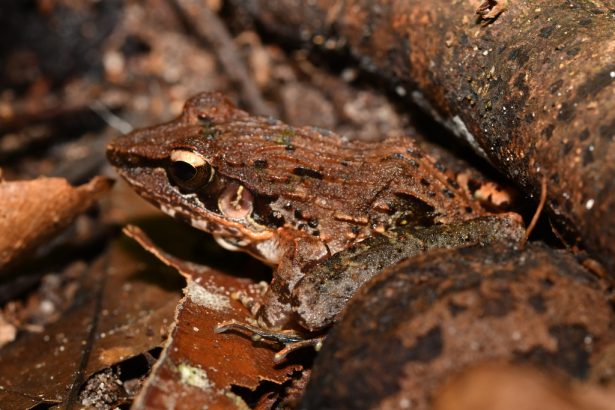
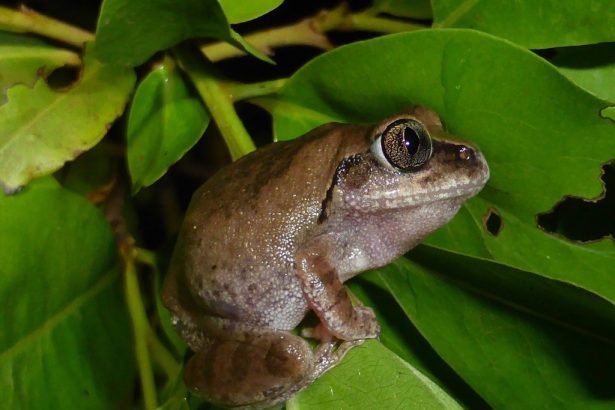
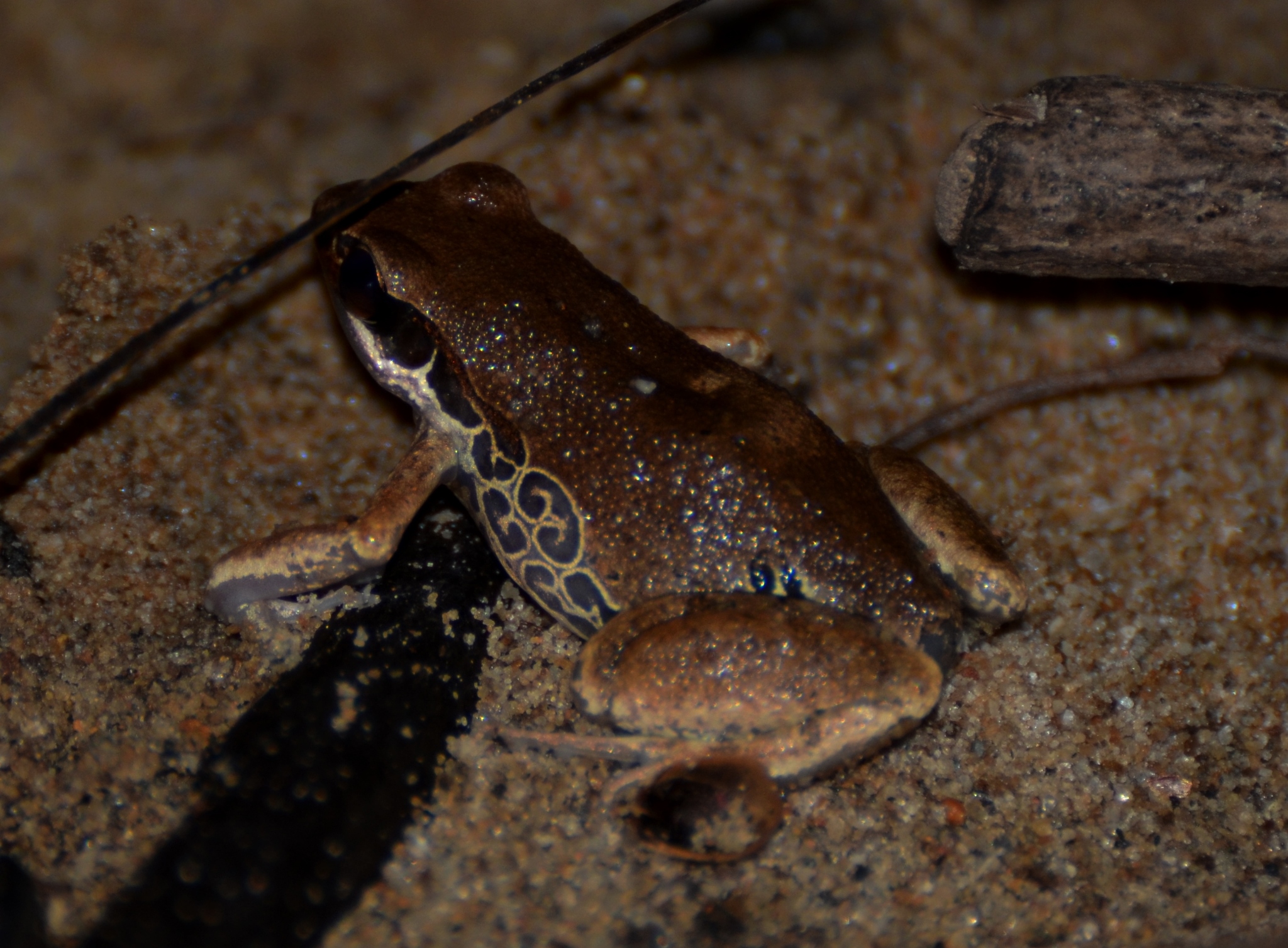
- Color: Brown or tan with dark lateral stripes and white facial markings
- Distinguishing Trait: Males have extremely long third fingers
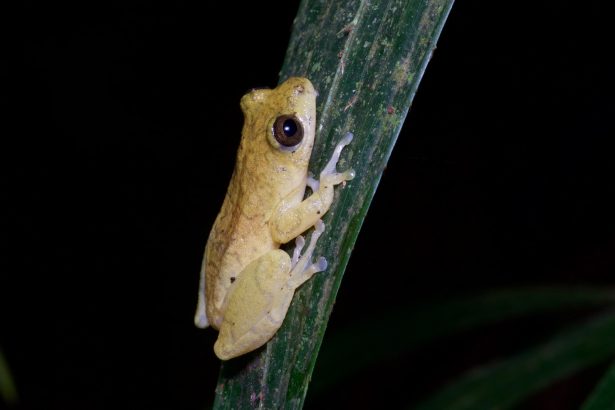
- Body: Slender build with elongated limbs for jumping
- Eyes: Large and forward-facing, adapted for low-light vision
The species name leucomystax refers to the white stripe on the face—a key identifier.
Behavior and Ecology
- Nocturnal and secretive
- Active during wet seasons, especially after rainfall
- Males call from concealed spots near streams and puddles
- Diet: Small insects, ants, termites, and forest floor invertebrates
Their calls are soft trills or chirps, often masked by forest noise.
Reproduction
- Breeds in small, slow-moving forest streams or temporary pools
- Males call to attract females from concealed moist areas
- Eggs are laid in shallow water or wet leaf litter
- Tadpoles are aquatic, requiring clean, shaded water to develop
Ecological Importance
This frog is an important part of the rainforest micro-ecosystem:
- Controls populations of forest insects
- Provides food for snakes, birds, and mammals
- Indicates the health of riparian (stream) habitats
Its presence helps scientists understand how the forest floor is functioning.
Conservation Concerns
Although classified as Least Concern, Cardioglossa leucomystax is locally threatened by:
- 🌳 Deforestation, especially near forest streams
- 🛢️ Water pollution from mining and agriculture
- 🧱 Habitat fragmentation, which isolates breeding populations
- 🔇 Lack of monitoring, making it easy to overlook population declines
Its breeding is tied to specific microhabitats, which are sensitive to even minor changes.
Why It Matters for the Tano River
The Leaping Long-fingered Frog is:
- A silent engineer of the forest floor
- A micro-indicator of water and soil quality
- A symbol of hidden biodiversity that thrives in the shadows and silence
Every leap it takes through the Tano forest reminds us: even the smallest species carry the forest forward.
🔗 Have you seen or heard tiny frogs near your forest streams? Know of shallow pools where frogs gather after rain? Share your knowledge at [TanoRiver.com/submit]