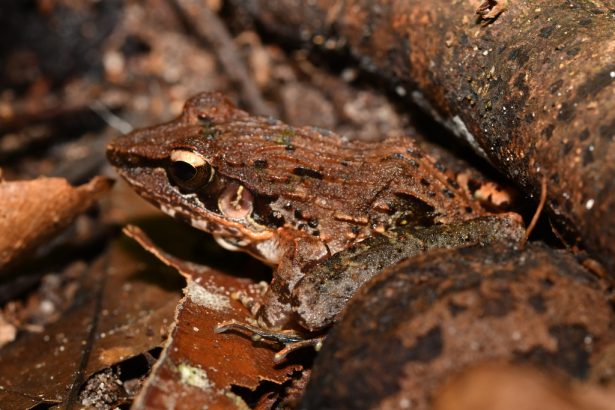
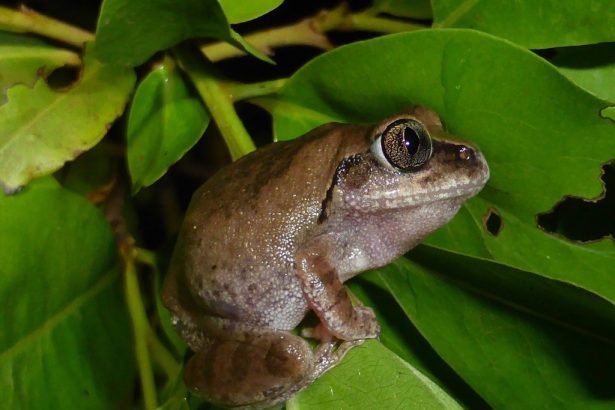
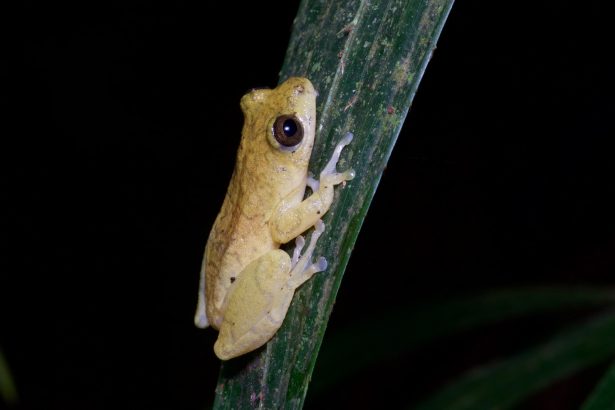
Afrixalus dorsalis – La rainette banane brune
Cet article n’est pas encore disponible en français : vous lisez la version originale en anglais. Voir la page anglaise
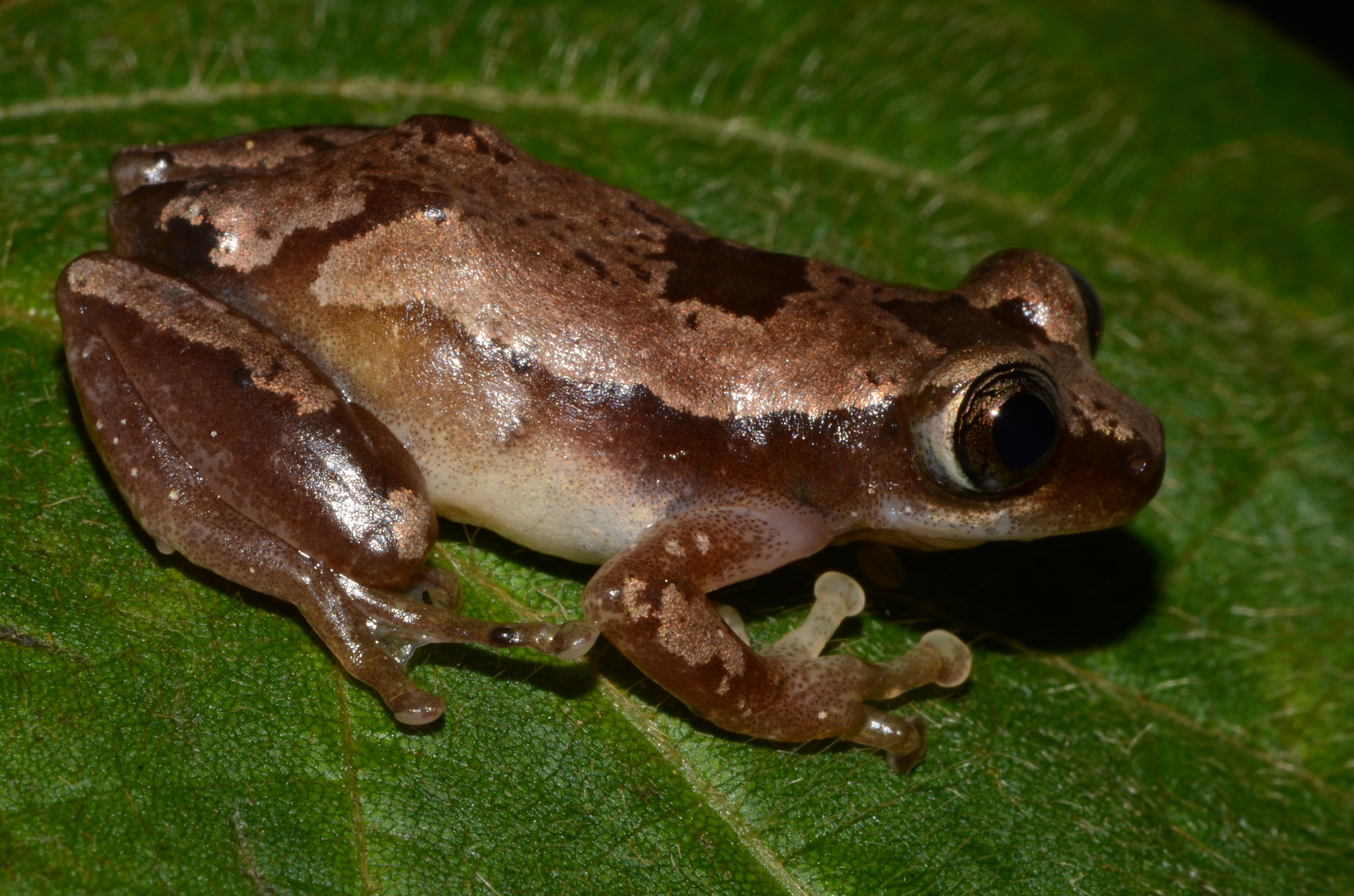
A tiny, agile climber of plantain stems and forest reeds in the wetlands of the Tano
Quick Facts
- Common Name: Brown Banana Frog
- Scientific Name: Afrixalus dorsalis
- Family: Hyperoliidae (Reed Frogs and Leaf-folding Frogs)
- IUCN Status: Least Concern, but locally impacted
- Size: 20–30 mm (one of West Africa’s smallest frogs)
- Activity: Nocturnal
- Habitat: Wetlands, flooded grasslands, plantain and banana groves, forest edges
Distribution and Habitat
The Brown Banana Frog is found across West and Central Africa, including:
- Ghana, Côte d’Ivoire, Liberia, Nigeria, and Cameroon
In theTano River basin, it thrives:
- Near banana and plantain farms, particularly those near streams
- In forest swamp zones, rice paddies, and wet grassy clearings
- Around seasonal pools and leafy vegetation
It is one of the few frogs adapted to both forested and agricultural zones.
Appearance
- Color: Light to medium brown with faint dorsal lines or mottled patterns
- Size: Very small and lightweight
- Eyes: Protruding, with horizontal pupils
- Body: Slender, with long limbs and adhesive toe pads for climbing smooth surfaces
- Distinctive Behavior: Folds banana or broad leaves to wrap and protect its eggs
This habit gives the species its name — “banana frog.”
Behavior and Ecology
- Active mainly at night, especially during and after rainfall
- Clings to plantain stems, grasses, or leaf undersides
- Males call from vegetation near shallow water to attract mates
- Diet: Mosquitoes, gnats, tiny beetles, and other flying insects
Its call is a high-pitched buzzing trill, often heard more than seen.
Reproduction
- Breeds in temporary pools, drainage ditches, or swamp edges
- Females lay eggs on leaves, which they fold and glue shut
- Upon hatching, tadpoles fall into water below, completing development
This unique leaf-folding strategy protects eggs from predators and dehydration.
Ecological Role
- Controls mosquito and fly populations
- Serves as prey for birds, snakes, and dragonfly larvae
- Helps maintain balanced aquatic and wetland ecosystems
Its ability to survive in lowland farms and disturbed wetlands makes it an important bridge species between wild and human habitats.
Conservation Concerns
Though widespread, Afrixalus dorsalis faces risks in the Tano River region from:
- 🚜 Habitat drainage for farming and development
- 🛢 Pesticide use in plantain and banana fields
- 🧱 Wetland degradation from illegal mining and runoff
- 🔇 Lack of awareness, as its small size and camouflage hide it from most observers
Why It Matters for the Tano River
The Brown Banana Frog is:
- A resilient forest ambassador, thriving where water and green meet
- A natural pest controller, especially near riverine farms
- A symbol of hidden adaptation, proving that even small life can be clever and vital
It reminds us that wetlands and river margins, even in farmland, are ecosystems worth preserving.
🔗 Have you seen tiny frogs clinging to plantain stems or found folded leaves near streams? Share your sightings at [TanoRiver.com/submit]