Athérure africain (Atherurus africanus)
Cet article n’est pas encore disponible en français : vous lisez la version originale en anglais. Voir la page anglaise
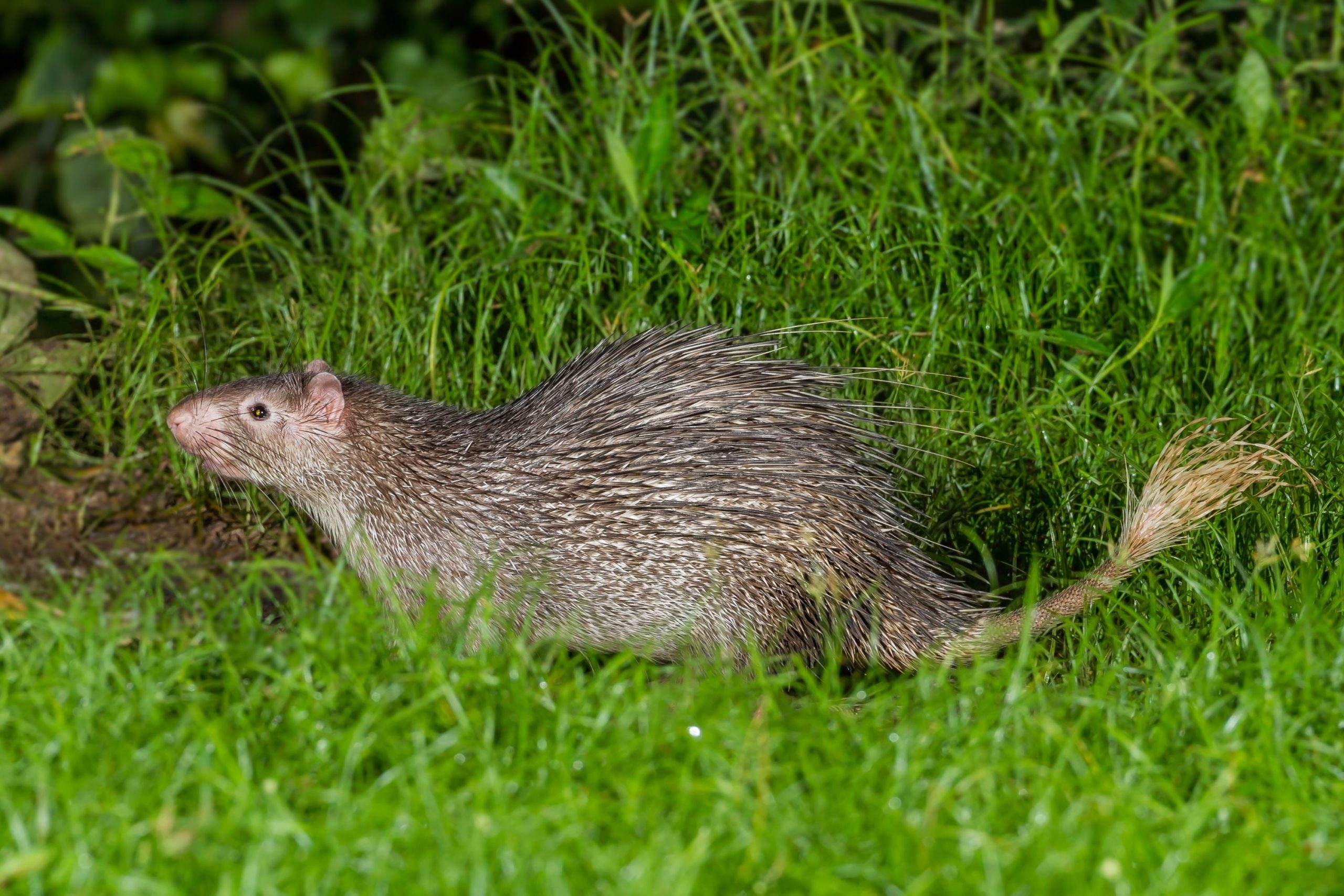
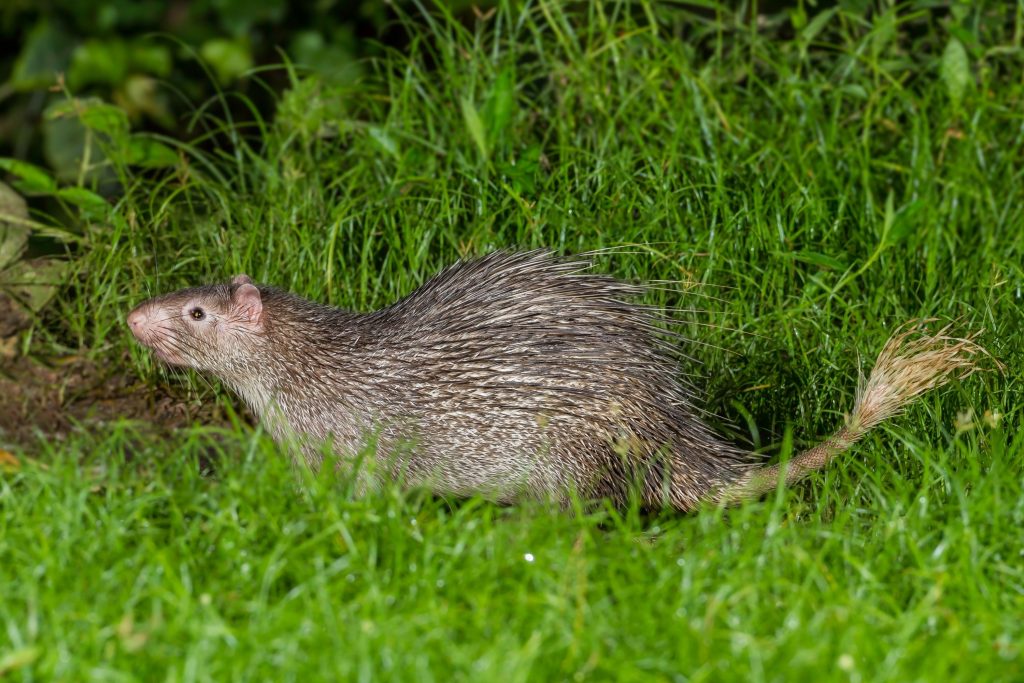
Also known as: Soft-spined Porcupine, Forest Porcupine
Habitat
This porcupine inhabits dense tropical rainforests, forest edges, and swamp forests, including areas around the Tano River, the Boin Tano Forest Reserve, and the Tanoé-Ehy wetlands. It prefers humid, closed-canopy zones with abundant undergrowth and root systems.
It is often found near burrows, hollow logs, or rocky crevices where it can hide during the day.
Conservation Status
- IUCN Red List: Least Concern, but locally overhunted
- Main threats:
- Hunting for bushmeat, especially in Ghana and Côte d’Ivoire
- Habitat degradation from mining, logging, and agriculture
- Low reproductive rate makes population recovery slow
Description
- Medium-sized rodent weighing up to 4–6 kg (9–13 lbs)
- Covered in coarse hairs and short quills, with a distinctive brush-like tail
- Tail quills can rattle when agitated, used as a warning
- Not as heavily armored as other porcupines but agile and quiet
Behavior
- Nocturnal and shy
- Lives in pairs or small family groups, often reusing burrows
- Feeds on roots, tubers, fallen fruits, bark, and some invertebrates
- Emits grunts, hisses, and tail rattling sounds when threatened
Ecological Role
- Forest floor recycler: spreads seeds, breaks up soil layers, disperses fungi
- Helps aerate the soil through digging
- Preyed upon by large carnivores, eagles, and humans
- Considered a bioindicator for healthy, undisturbed forest ecosystems
Cultural Significance
Among Akan and other West African peoples, the brush-tailed porcupine is respected for its quiet strength and resourcefulness. In some folk tales, it is portrayed as a symbol of humility and perseverance, living simply but defending itself with determination when needed.
Its quills are occasionally used in ritual or symbolic crafts, representing protection, warning, and patience.
Conservation Needs
- Regulate bushmeat hunting in protected areas
- Educate communities on its slow reproduction and ecological role
- Support sustainable forest use and reforestation
- Promote as a flagship species in biodiversity corridors like Boin Tano