Ceryle rudis – Le martin-pêcheur pie
Cet article n’est pas encore disponible en français : vous lisez la version originale en anglais. Voir la page anglaise
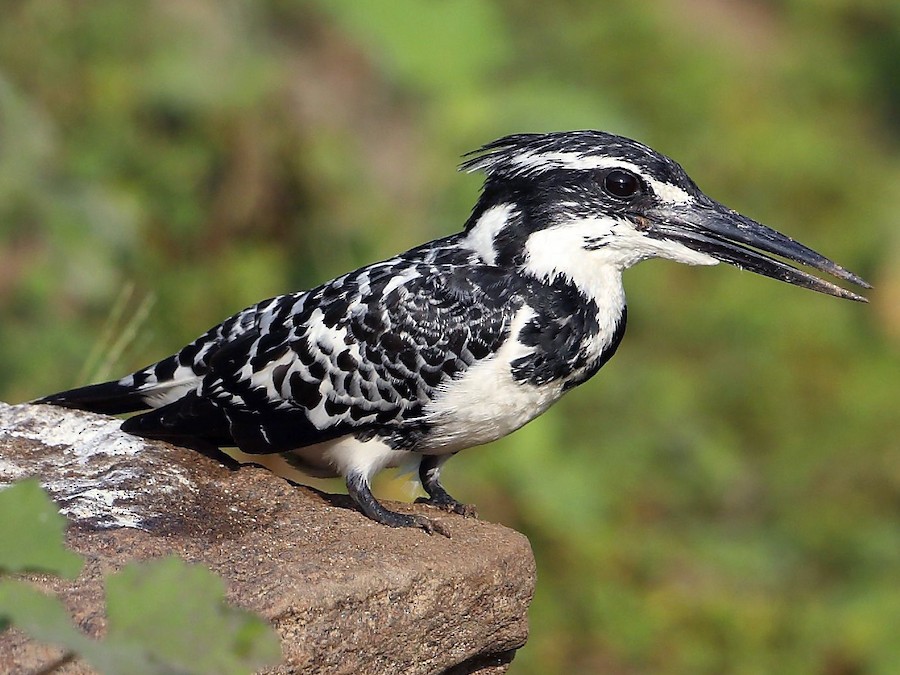
A hovering hunter of the Tano River’s surface, cloaked in black and white
Scientific Name:Ceryle rudis
Common names: Pied Kingfisher, Black-and-white kingfisher
Family: Alcedinidae (Kingfishers)
IUCN Status: Least Concern
Distribution and Habitat
The Pied Kingfisher is widely distributed across Africa and Asia, especially near freshwater sources. It is one of the most visible bird species along rivers in West Africa.
In theTano River ecosystem, it inhabits:
- Riverbanks, lagoons, wetlands, and floodplains
- Found near:
- Tendo Lagoon, Aby Lagoon, and forested stretches of the Tano River
- Fishing villages, mangrove edges, and reed beds
Its adaptability to both natural and human-altered aquatic habitats makes it a common sight.
Physical Description
- Size: 25–30 cm (10–12 inches)
- Coloration:
- Bright black-and-white plumage, with a distinct black eye-stripe
- Males have a double black breast band, females only one
- Bill: Long, straight, and dagger-like — perfect for catching fish
- Flight: Remarkably agile, often seen hovering over water before diving
Their dramatic black and white pattern makes them easy to identify, even from afar.
Behavior and Ecology
- Feeding habits:
- Specialized fish-eater
- Hunts by:
- Hovering above water, spotting prey
- Diving headfirst to snatch fish just below the surface
- Eats mostly small fish, but also aquatic insects and crustaceans
- Activity:
- Diurnal (active during the day)
- Often seen perching on sticks, poles, or rocks near water
- Social behavior:
- Usually solitary or in pairs
- Can be colonial nesters in suitable areas
Nesting and Reproduction
- Nests in horizontal burrows excavated in sandy riverbanks
- Both sexes help dig the tunnel, which can be 1–2 meters long
- Female lays 3–6 eggs, incubated by both parents
- Chicks are fed regurgitated fish until fledging
They often return to the same nest sites year after year.
Ecological Role
- Helps control small fish populations, balancing aquatic ecosystems
- Acts as a bioindicator of healthy, unpolluted waterways
- Contributes to soil turnover through its nest burrowing activities
Its dependence on clear, fish-filled rivers makes it sensitive to water pollution and overfishing.
Cultural Significance
In many African riverine cultures, the Pied Kingfisher is:
- Seen as a symbol of precision and patience
- Sometimes linked to omens or river deities, especially where birds are seen diving repeatedly in the same spot
- A familiar sight to fisherfolk, who often view it as a companion or competitor
Its behavior has inspired folktales about hunting, vigilance, and water spirits.
Threats
- Although not endangered, Pied Kingfishers face local threats:
- 🛢️ Water pollution from mining (especially galamsey)
- 🧱 Habitat loss due to riverbank development
- 🎣 Fish stock depletion and use of toxic fishing practices
The Tano River's health directly impacts the survival and visibility of this bird.
Why It Matters for the Tano River
The Pied Kingfisher is:
- A guardian of the water’s edge
- A symbol of clean rivers and sustainable fish populations
- A daily presence reminding us of the river’s beauty and fragility
It hovers like a prayer above the water — silent, focused, and fleeting as a ripple.
🔗 Have you seen the Pied Kingfisher dive on the Tano or its lagoons? Share your birdwatching moment at [TanoRiver.com/submit]