Les guêpiers du fleuve Tano (Tanoé)
Cet article n’est pas encore disponible en français : vous lisez la version originale en anglais. Voir la page anglaise
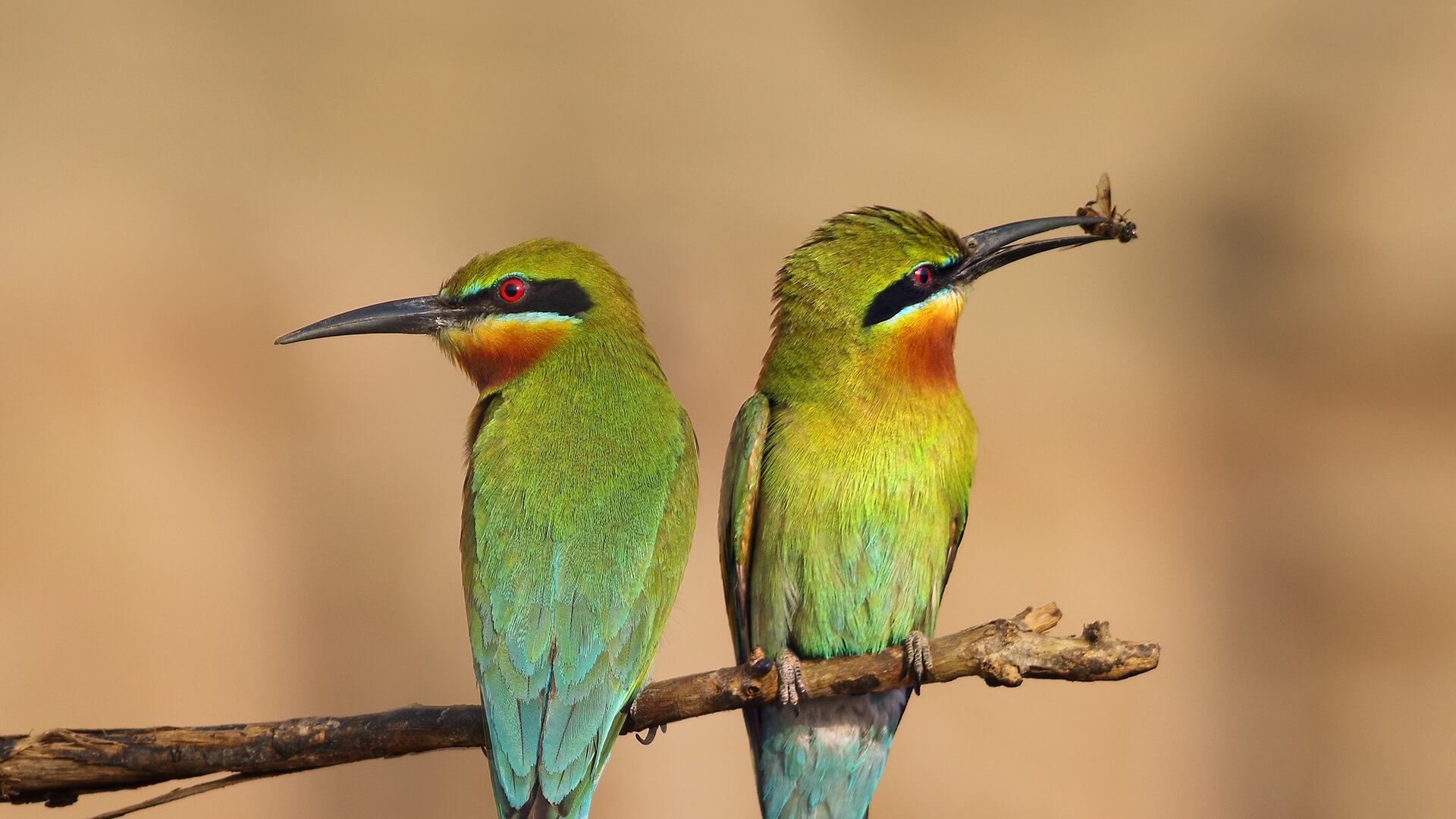
Flashy hunters in the sky, dazzling colors above the water’s edge
Overview
Bee-eaters are a group of strikingly colorful birds known for their graceful flight, acrobatic hunting, and brilliant plumage. They belong to the family Meropidae.
In the Tano River region, especially along open riverbanks, lagoons, and savanna edges, several species of bee-eaters can be found.
Habitat and Distribution
Commonly observed in:
- Open woodlands, riverbanks, and wetland edges
- Perch on bare branches, wires, or termite mounds near water
- Often seen in pairs or small flocks, performing aerial swoops to catch insects
Found near:
- The main course of the Tano River
- Tendo and Aby Lagoons
- Edges of the Tanoé-Ehy Forest and savanna clearings
Notable Species in the Tano Region
1.White-throated Bee-eater (Merops albicollis)
- Green body, white throat, black eye-stripe, and long tail streamers
- Migratory: visits the region during breeding season
- Often nests in riverbank burrows
2.Little Bee-eater (Merops pusillus)
- Small, bright green with a yellow throat and black collar
- Resident species in the area year-round
- Nests in sandy banks and termite mounds
3.Red-throated Bee-eater (Merops bulocki)
- Vibrant red throat, green body, and blue underparts
- Seen in savanna wetlands and riverine vegetation
- Less common but present seasonally in parts of the Tano Basin
Diet and Hunting
- Feed mainly on bees, wasps, dragonflies, butterflies, and other flying insects
- Use sharp vision and quick reflexes to catch prey in flight
- Remove stingers by rubbing insects on a branch before eating
Their feeding activity makes them important for controlling insect populations.
Nesting
- Dig horizontal tunnels into sandy riverbanks, sometimes forming colonies
- Both male and female excavate the burrow and care for the chicks
- Prefer undisturbed sandy banks near water
Their nesting behavior contributes to soil aeration and riverbank ecology.
Cultural Significance
Bee-eaters are admired for:
- Their beauty and agility
- Being messengers of good weather in some oral traditions
- Symbols of fidelity and teamwork, as pairs often remain close and hunt cooperatively
In some African folktales, they are considered lucky birds that guide travelers near water.
Threats and Conservation
Although not endangered, bee-eaters face localized threats:
- Loss of nesting banks due to mining, erosion, and construction
- Pesticide use, which reduces insect populations
- Disturbance during nesting season
Protecting natural riverbanks, wetlands, and pollinator habitats ensures their survival.
Why They Matter for the Tano River
Bee-eaters are:
- A sign of a healthy insect population and clean air
- Riverbank specialists that depend on natural ecosystems
- Birds that bring color, motion, and joy to the skies above the Tano
Their presence signals that the river is not just alive — but alive with light and flight.
🔗 Have you seen bee-eaters skimming above the Tano or near your village? Share your photos or stories at [TanoRiver.com/submit]