La lagune Ébrié
Cet article n’est pas encore disponible en français : vous lisez la version originale en anglais. Voir la page anglaise
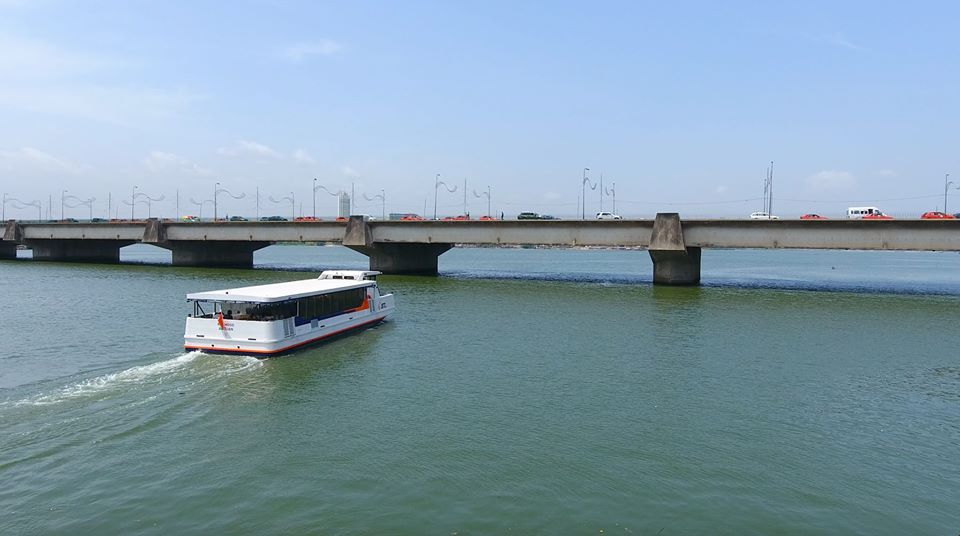
A Sacred Mirror Beneath the City of Abidjan
Introduction
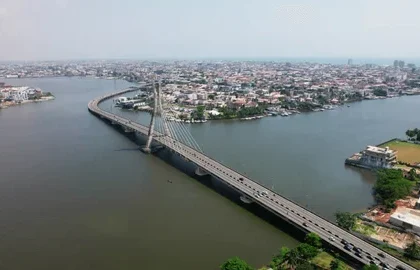
The Ébrié Lagoon lies like a mirror beneath the city of Abidjan, Côte d’Ivoire’s economic capital. It is the country’s largest lagoon, a meeting place of freshwater and saltwater, and for centuries, a meeting place of people and spirits, fisherfolk and ancestors, mangroves and myths.
Once revered by the Ébrié people for whom it is named, the lagoon is now choking beneath modern weight—pollution, land reclamation, overfishing, and neglect.
The Rivers, Lakes & Lagoons Collective honors the Ébrié Lagoon not only as a body of water, but as a living symbol of coastal West Africa’s struggle to balance tradition and urbanization, ecology and survival.
Geography and Structure
- Location: Southern Côte d’Ivoire, bordering the Gulf of Guinea
- Length: ~130 km (east to west)
- Width: ~4–7 km on average
- Surface Area: Over 560 km²
- Cities Along It: Abidjan, Grand-Bassam, Bingerville, Port-Bouët
- Connected Rivers: Comoe (indirectly), Bété, Agnéby, Mé
- Connected to the Sea via the Vridi Canal (an artificial channel opened in 1950)
Ecological Significance
The Ébrié Lagoon is a brackish ecosystem—a dynamic interface between freshwater rivers and ocean tides. Its biodiversity includes:
Fauna
- Tilapia, catfish, prawns, crabs, and mullet
- Waterbirds: herons, kingfishers, egrets, migratory waders
- Occasional manatees and crocodiles in the past
- Mangrove nurseries crucial for juvenile fish and crustaceans
Flora
- Red and white mangroves (Rhizophora, Avicennia)
- Aquatic plants: water hyacinths, lilies, and floating grasses
- Riparian vegetation once buffered against erosion, now degraded
Cultural and Historical Importance
The lagoon takes its name from the Ébrié people, a coastal Akan group related to the Akan and Atchan. To them, and to other lagoon peoples like the Adjoukrou, Alladian, and Abouré, the lagoon is:
- A sacred being inhabited by water spirits
- A source of livelihood, identity, and ritual purity
- A site for funeral rituals, ancestral offerings, and taboos—such as periods when fishing is forbidden
- Historically, a highway of commerce and travel before colonial roads
Several sacred islets, rocks, and mangrove groves were once off-limits under traditional law. Some were reserved for healing, ritual bathing, or initiations.
Environmental and Urban Pressures
Once clear and life-filled, the Ébrié Lagoon today is one of the most polluted in West Africa.
1.Urban Waste and Sewage
- Abidjan, a city of 5+ million, discharges raw sewage, solid waste, and chemicals directly into the lagoon
- Slums and informal settlements along the shore lack wastewater systems
- Heavy metal contamination (lead, cadmium, mercury) is rising
2.Loss of Mangroves
- Reclaimed for development, housing, roads, and ports
- Mangroves act as filters and breeding grounds; their loss weakens the ecosystem
3.Overfishing and Biodiversity Collapse
- Traditional species are dwindling or extinct in some areas
- Invasive species like water hyacinths clog the waters
4.Climate Change and Salt Intrusion
- Sea level rise and changing rainfall patterns threaten lagoon salinity balance
- Flooding and shoreline erosion are increasing, affecting homes and infrastructure
Pathways to Restoration
Though heavily degraded, the Ébrié Lagoon is not beyond saving. Community groups, scientists, and traditional leaders are calling for:
Rehabilitation Measures
- Sewage treatment plants to protect the lagoon’s water quality
- Reforestation of mangroves, especially in Grand-Bassam and Bingerville
- Waste management reforms in Abidjan
- Sustainable fisheries programs for lagoon-based livelihoods
Cultural Revival
- Reinstating taboos and seasonal bans on fishing
- Re-mapping sacred sites and involving traditional leaders in lagoon governance
- Educational campaigns targeting youth in lagoon communities
Conclusion: A Lagoon of Spirit and Survival
The Ébrié Lagoon is not just Abidjan’s backyard—it is Côte d’Ivoire’s cultural shoreline, a sacred mouth where rivers once whispered prayers to the sea. If the lagoon dies, a piece of Ivorian identity dies with it.
Let us not allow this sacred water to become only a memory.
Let us remember what the elders once said:
“The lagoon knows who respects it. And who forgets.”
🌍 www.TanoRiver.com
The Rivers, Lakes & Lagoons Collective
Ébrié Lagoon: Mirror of Abidjan, Soul of the Coast